That Viral "White Noise Damages Baby Hearing" Post Is Doing the Rounds Again. Here's the Actual Science.
Every few months a warning post goes viral in parenting groups. Here's what the research behind the scare actually says — and what it doesn't.
If you're in any parenting Facebook group or follow enough mom accounts on Instagram, you've seen the post. A screenshot, a quote from a pediatrician, sometimes a link to a study. "White noise machines are damaging your baby's hearing." It goes viral every few months. Parents panic. Machines get unplugged. Then it quietly disappears until the next cycle.
So what's actually going on?
There Is a Real Study. But It's Being Misread.
The concern traces back to a 2014 paper in Pediatrics (Hugh et al.) that tested 14 commercially available white noise machines. At maximum volume, measured 30cm away, most of them exceeded 85dB — the threshold NIOSH identifies as a hearing risk with prolonged adult exposure.
That part is real. The leap that happens in viral posts — that white noise therefore damages babies' hearing — is not what the study shows.
What it shows is: if you run a machine at full volume right next to your baby's head, that's a problem. Which, fair enough.
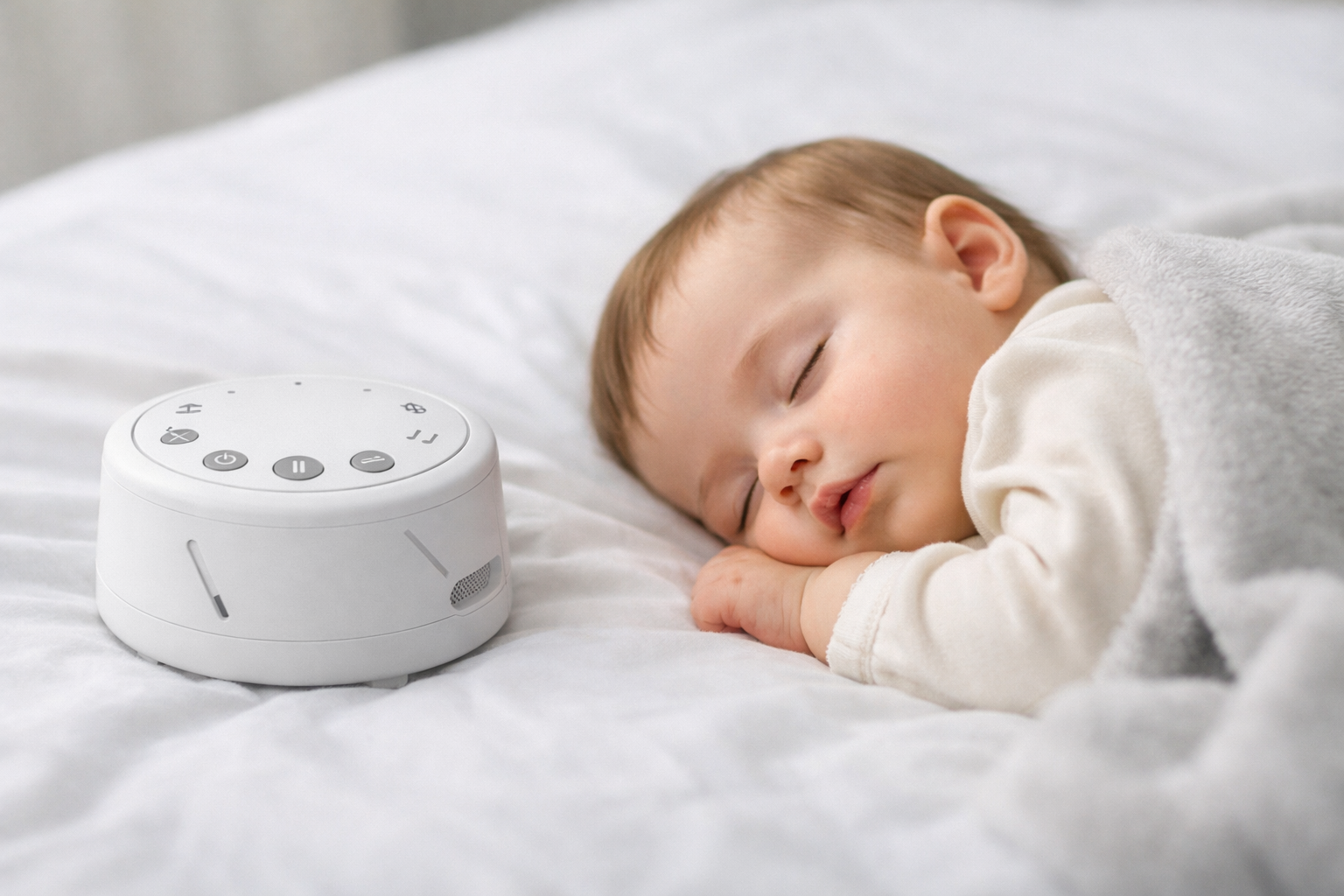
The AAP Doesn't Say to Stop Using It
Here's the thing American parents don't always realize: the American Academy of Pediatrics hasn't issued guidance telling parents to ditch white noise. What they and other bodies have done is echo the same message as that 2014 paper — keep the volume reasonable and the machine at a distance.
The WHO recommends keeping infant sleep environments below 45dB. A quiet room is already around 30–40dB. So you don't need much. The problem is that American baby product culture tends toward excess — if some white noise is good, louder must be better, right? That's where things go sideways.
Simple Rules That Actually Work
- Volume: 50dB or below. There are free apps (NIOSH SLM is a good one) that let you measure in real time.
- Distance: At least 6 feet (2 meters) from your baby's head. Across the room, not on the nightstand.
- Duration: Use it to help baby fall asleep. Timer off after that if you can.
50dB is roughly the ambient noise in a quiet coffee shop. Plenty to mask the sound of your dog or your upstairs neighbor. Not remotely close to a danger level.
The Womb Counterargument
Here's something worth knowing: studies have estimated the sound environment inside the womb at around 85dB. Babies didn't come into the world expecting silence. They were marinated in noise for nine months.
That's not a justification for blasting white noise at your newborn — it's context. A soft hum across the room isn't fighting your baby's biology. It's actually kind of working with it.
Does white noise actually make a difference in your house, or did you try it and end up going back to just hoping for the best?
How was this article?